This Macroeconomic Outlook report is excerpted from the Fourth Quarter 2026 Fixed-Income Sector Views.
AI fuels growth, but energy-driven inflation keeps more Fed hikes in play.
The U.S. economic expansion remains resilient, with real gross domestic product expected to grow slightly more than 2 percent this year and next. AI-related capital spending continues to fuel growth, but investment is broadening across sectors. Tax provisions in the One Big Beautiful Bill Act, strong corporate profits, and lean inventories are supporting activity across much of the economy, while the industrial sector is also benefiting from AI demand. Consumer spending faces some headwinds as the tax boost fades, wage growth cools, and elevated gasoline prices erode purchasing power. Still, a steady labor market that is showing signs of strengthening should support spending, while strong gains in household wealth help offset modest real income growth. Because these gains largely reflect AI-driven market optimism, however, both consumer spending and business investment remain vulnerable to a shift in the AI narrative.
Inflation readings have shown modest progress in recent months, helped by the recent downward revisions and some cooler readings over the summer. But the 12-month rate of core Personal Consumption Expenditures (PCE) remains stuck around 3 percent, while robust growth and war-related energy price spikes threaten to prolong this stickiness. Refined-product energy prices, particularly diesel, have hit new highs in recent weeks, and broader commodity prices have also moved higher. And while the worst of the memory cost spillover to consumer software prices looks to be behind us, more AI effects on consumer tech hardware could lie ahead. Altogether we see the year-over-year rate of core PCE staying around 3 percent through year end, before moderating to around 2.5 percent in 2027.
The September Fed hike revealed the Federal Open Market Committee believes the economy is strengthening, increasing its growth projections even as the expected path of policy rates moves up. For now, the restart of rate hikes does not appear designed to derail this economic strength, but rather to limit upside risks to inflation by “removing a dose of accommodation.” We think the Fed will hike once more in 2026 before they hold and assess the inflation trend. Should it decide more actively restrictive policy is called for, there is a risk of additional hikes, an outcome on which the market is putting a high probability.
Strong Wealth Gains Cushioning Consumers From Softening Wages
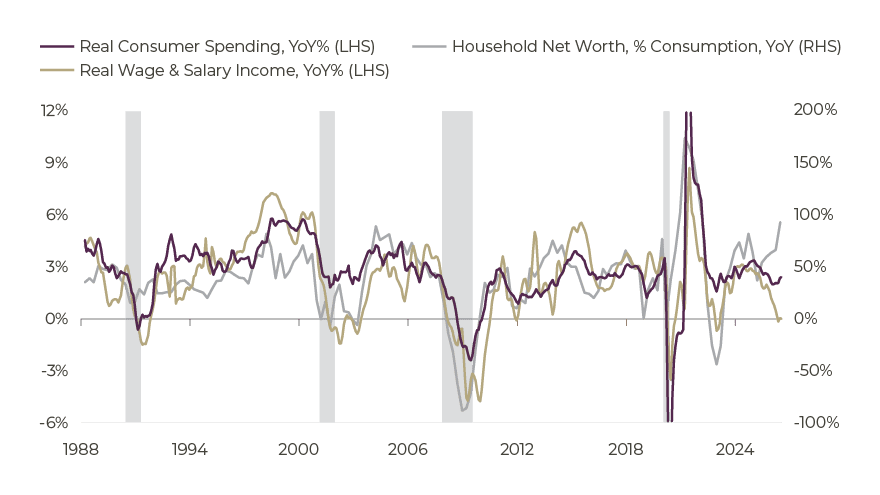
Source: Guggenheim Investments, BEA, Federal Reserve, Haver. Data as of 7.31.2026 for spending and income, 6.30.2026 for net worth. Spending and income are 3-month moving averages.